Interaction with Journalists on Accessibility and Participation of Persons with Disabilities in Elections

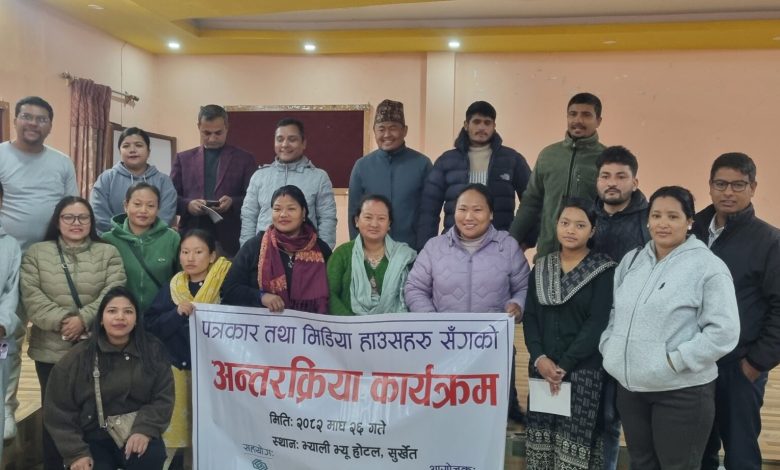
Surkhet –An interaction program with journalists on the accessibility and meaningful participation of persons with disabilities in the election process was held on Monday in Birendranagar, organized by the Research and Development Center for Indigenous Persons with Disabilities, Surkhet.
The discussion focused on the practical challenges faced by persons with disabilities in the electoral process, including lack of physical infrastructure, limited access to information, and insufficient assistive materials.
The program emphasized ensuring meaningful participation of persons with disabilities in elections, the arrangement of accessible polling stations, and the protection of their rights through dialogue with journalists and media houses.
Facilitator Surya Bhattarai stated that prior preparation is extremely important to make elections inclusive. According to him, not only the physical structure of polling stations but also the provision of information materials, sign language interpreters, support volunteers, and disability-friendly voting equipment is necessary.
“To increase participation, practical planning is needed, not just slogans,” he said, adding that coordination from the local level to the Election Commission is essential to build accessible structures.

Participants in the program complained that the roads leading to polling centers, building structures, toilets, signage, and the management of support staff are still inadequate.
Prathama Shrestha, Chairperson of the Research and Development Center for Indigenous Persons with Disabilities, stressed that equal participation of all citizens in democratic practice is essential and that the state must take the issue seriously to prevent persons with disabilities from being excluded from the electoral process.
She said, “Rights guaranteed by the Constitution must be implemented in practice. The situation where many citizens are deprived of exercising their voting rights due to inaccessible polling centers must end.”
Shrestha also expressed the view that policy reform will only gain momentum if the media prioritizes such issues.
Journalists participating in the interaction committed to continuously raising the issues of persons with disabilities through news, articles, and dialogue. They stated that public awareness would be increased by expanding access to information on sensitive matters like elections, using positive language, and publishing successful practices. They also expressed determination to prepare fact-based investigative content to hold policymakers accountable.
The program concluded that the role of the media sector is decisive in revealing the real situation of persons with disabilities. Participants emphasized the need for cooperation among all stakeholders to ensure accessible polling stations, guaranteed support services, and implementation of inclusive policies in upcoming elections.
A total of 24 journalists were present at the program